Reglet regret.
Hi and good morning Reggie!
I'm a stucco homeowner in Minnesota trying his best to figure out a roof line leak. I came across your site in my research and you sound like you know your stuff. I am hoping to talk to you a little bit about a water issue I'm having which I suspect is due to reglet flashing my roofers installed.
My roof got redecked and replaced a few years ago, and ever since then I have had a leak where a wall meets the roofline whenever we get hard wind-driven rain. I have had them come out multiple times to inspect and troubleshoot, and now they are saying my stucco is "shot" and there's nothing else they can do.
I was able to recreate the leak by spraying just above the reglet with a hose. They pulled out the reglet, applied more sealant, and replaced the reglet. It seemed to hold up after a second hose test, but after a hard rain a couple days later, I had water coming through my ceiling again... so now they're throwing up their hands, saying my stucco has gone bad and water is getting through it.
Here's my thing, though - I was under the impression that stucco, especially unpainted stucco like mine, is porous - water is always going to soak it and get behind it, and run down the barrier (tar paper in my case). So the water is going to run down behind the stucco, hit this reglet and line of sealant, and.... then what? It doesn't make sense to me in my head. I came across this posting of yours where you very passionately state that reglets don't work.
I just wanted to ask you, am I crazy here or does this line up with your experience? The roofers are saying they do reglets into stucco all the time and if it's leaking at my house, it's because my stucco has gone bad. This doesn't pass the smell test to me because I know stucco isn't waterproof. Should I be looking for a stucco crew to come out, cut out the bottom of the wall, install flashing, and re-stucco over it? If you have any advice for me, I'd be forever grateful.
Thanks for reading and I appreciate your time, especially the time you took to put information out on your website for yahoos like me. That's a lot of work that people take for granted.
Some pictures:
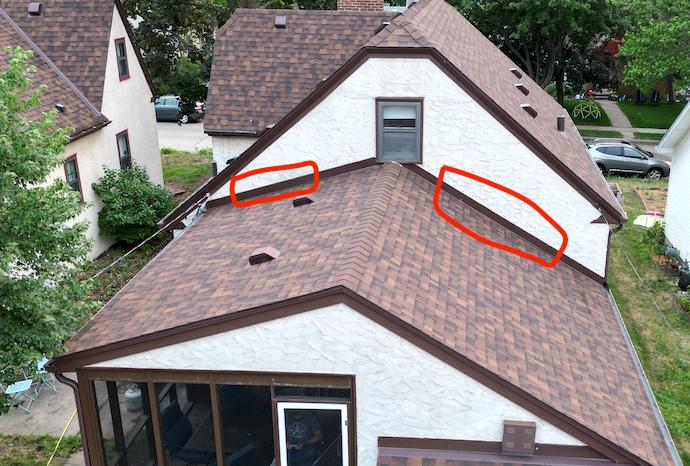
1) Areas where the hose test would leak below:
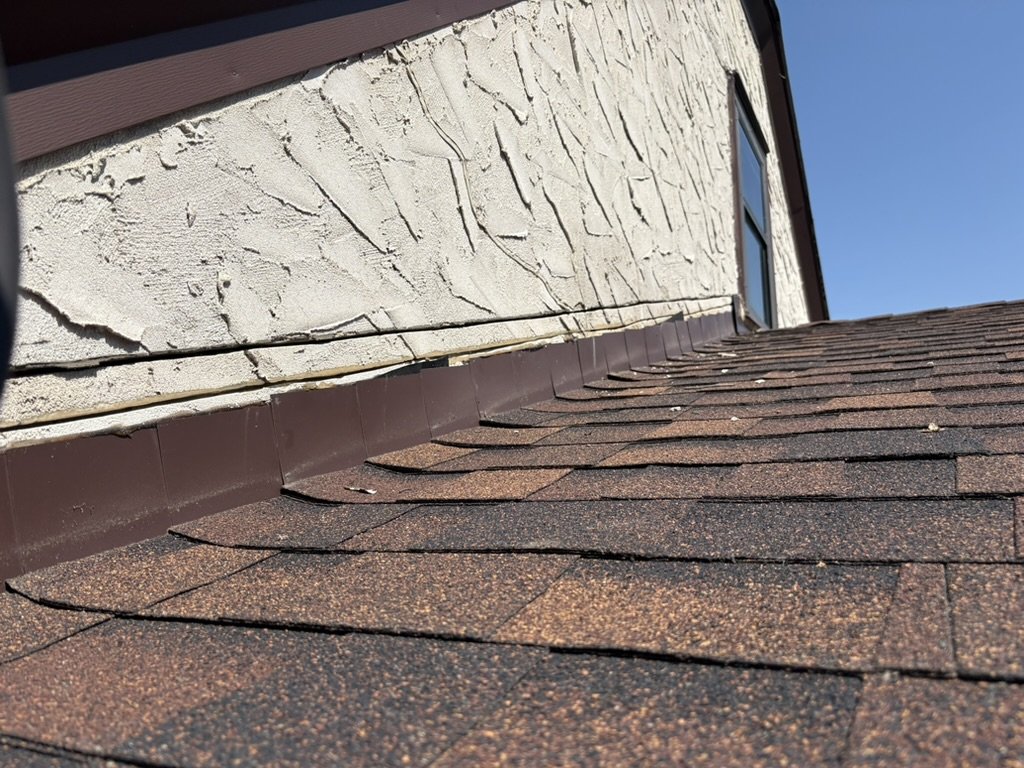
2) A picture I took after they took the reglet off, with the reglet grooves and step flashing visible. Step flashing over the top of stucco doesn't make sense to me, but what do I know?
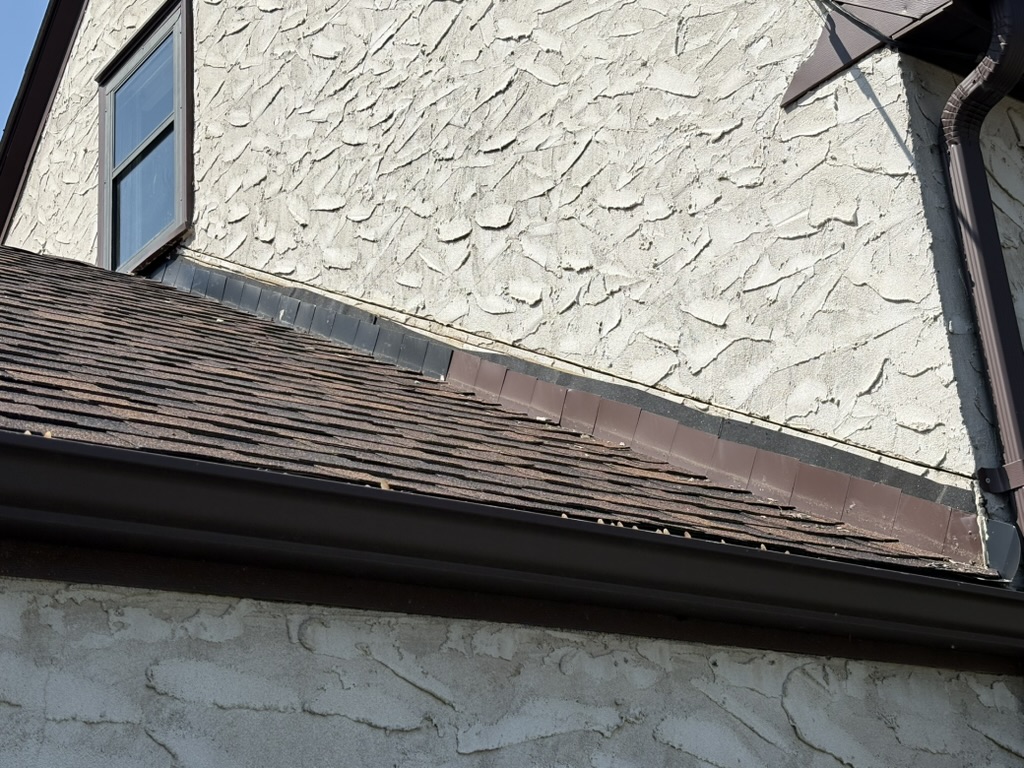
2)3) The other side...
My chant is:
REGLETS DON"T WORK FOR STUCCO.
( clap, clap, clap,clap)
REGLETS DON"T WORK FOR STUCCO.
( clap, clap, clap,clap)
REGLETS DON"T WORK FOR STUCCO.
( clap, clap, clap,clap)
Here is a link to a leak we fixed taking off the reglet and cutting the stucco off and putting on a counter flashing:
https://www.stucconews.net/questions/question3202.html
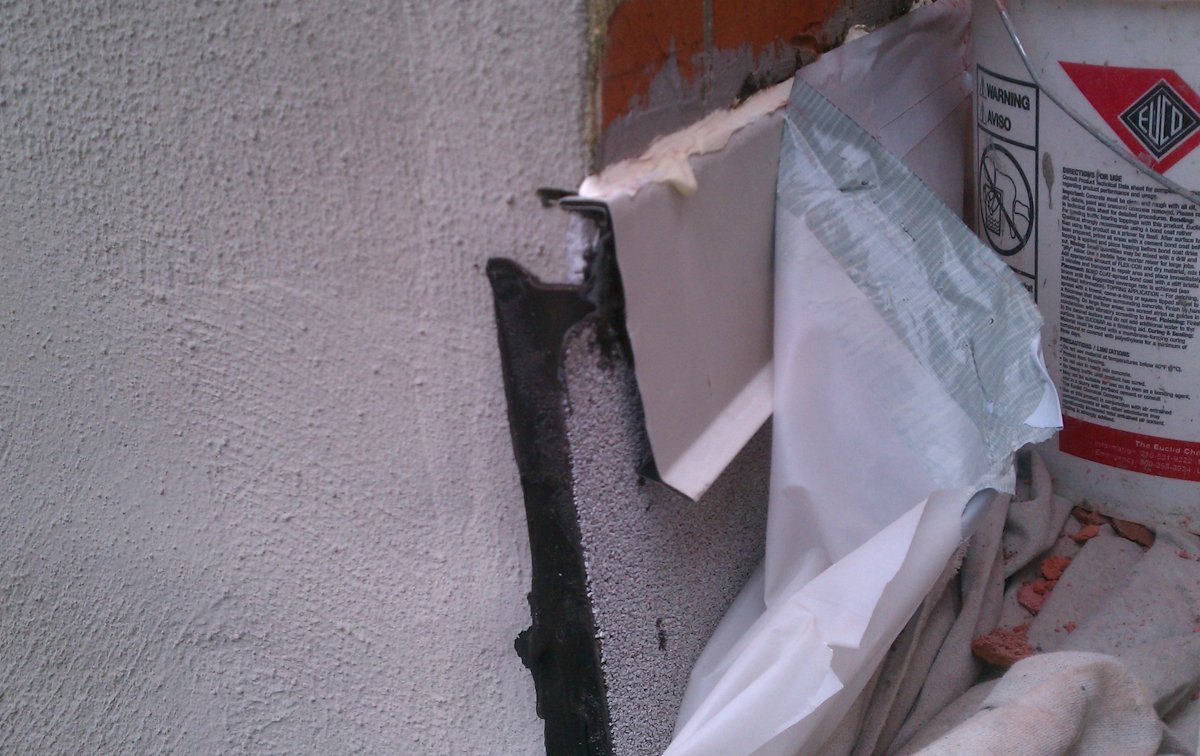
This reglet was poorly done. Water penetrates the stucco and runs behind the reglet. To make matters worse, an ugly gob of caulk prevents any water exiting. Also. the flange on the reglet flashing is angled down into the wall. Water that penetrated the stucco was diverted directly behind the membrane and ran freely into the ceiling below. Tell me this is logical. The roofing contractor paid me to fix the leak.
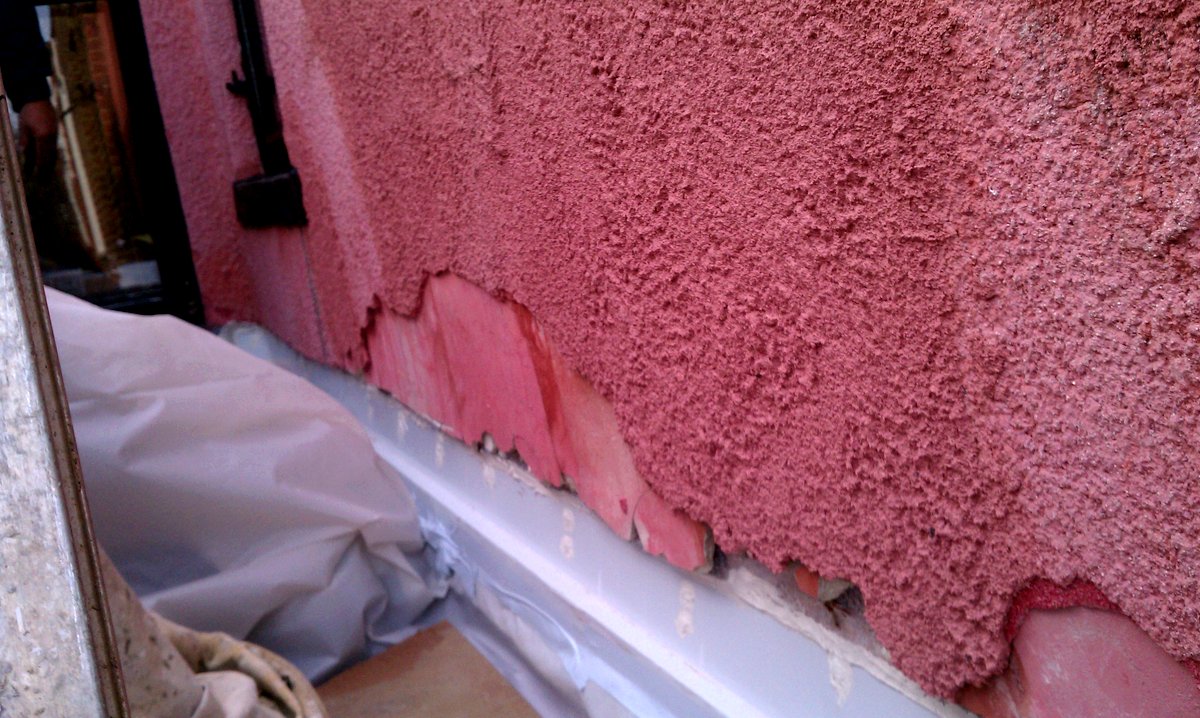
We cut off the stucco above the reglet flashing and put on an S flashing. This is like putting a roof over the flashing. The stucco was so bad we re did the whole wall. Excuse the junk on the roof. I would have straightened up if I knew I would use this picture 14 years later.
Yes, you are right, the step flashing should always go under the stucco and not over the stucco .
It is really to late to cut and put the step flashing under the stucco. Cutting off the stucco and putting on a counter flashing under the stucco and patching the stucco should correct this problem.
Also you need kickout flashings to divert water into the gutter. The kick outs need to go under the step flashing
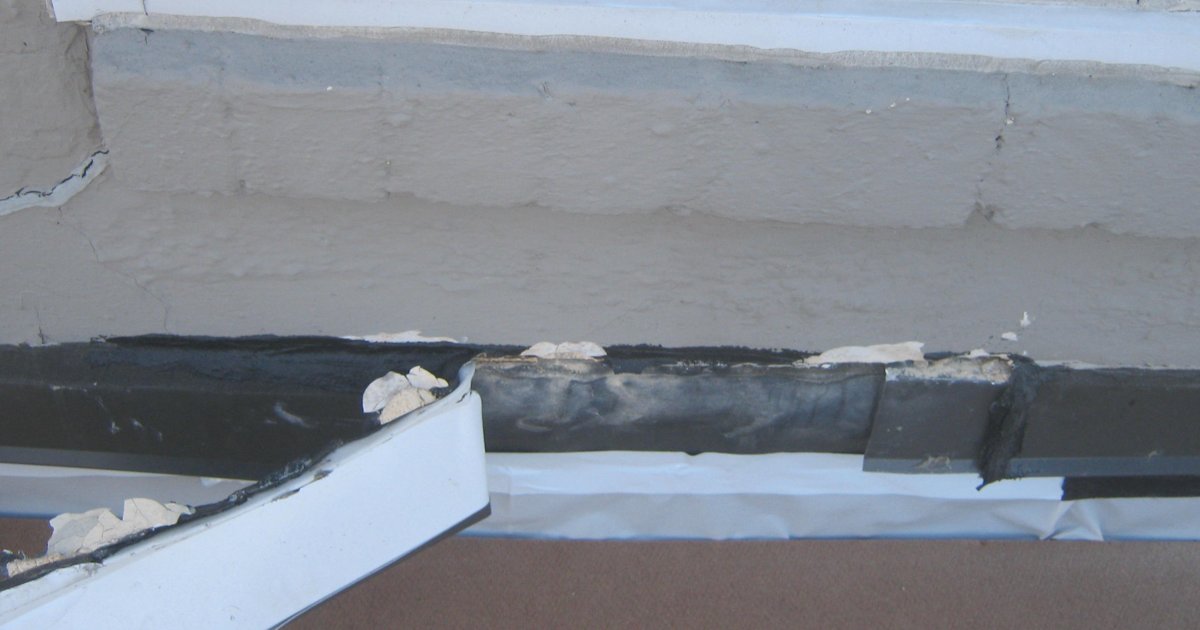
Here is a reglet flashing put on over the edge of a rubber membrane roof. Note the reglet only goes about a quarter inch into the stucco. There was a line of water stains under the edge of the roof line running the length of the house. This roof and reglet was recently done by a big roofing contractor in Washington, DC. I have worked on jobs with this company before, so I was shocked to see this. More on how we corrected this roof here in my chapter on flashing.
Flashing should go under the stucco and not over the stucco !!!
(clap, clap, clap, clap)
Flashing should go under the stucco and not over the stucco !!!
(clap, clap, clap, clap)
If you follow the link above, you can see examples on how we cut the stucco off and put on a counter flashing, and patch the stucco back.
If you scroll down to the job where we put a a band. The band hides the patch, and the patch will almost always show. Also, the stucco was colored cement mortar, very well done, and the color would be impossible to match. The white band contrasted with the color. Also, we drilled weep holes for a water exit. This was a lot of work, but was necessary for appearance, and functionality
This link here... shows a historic church we did the same way. Also, on the same page we put a flashing over the roof flange that was over the stucco and not under the stucco.
I am going to look at a job Monday, that the roofers said the same thing. They put the counter flashing over the stucco. Their solution was to smear gobs of black stuff over the top of the counter flashing and say the stucco was no good.
It is a good idea to check the roof above for a drip edge. The drip edge prevents water from running behind the rake board. A fascia board on an angle on a gable end is called a rake board.
This kind of stuff keeps us busy.
I hope this helps
Thanks so much for visiting my site