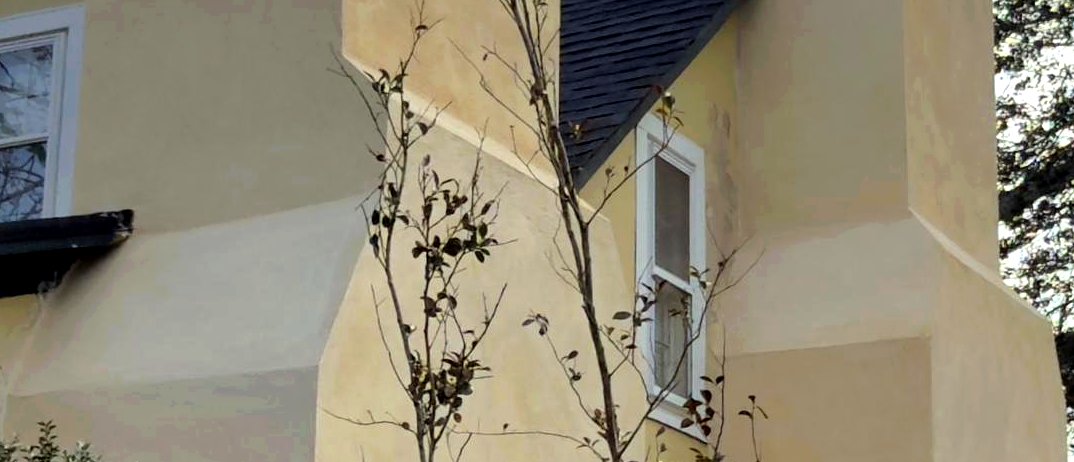
This expands on a previous column I wrote in July 2013: Follow this link for more....
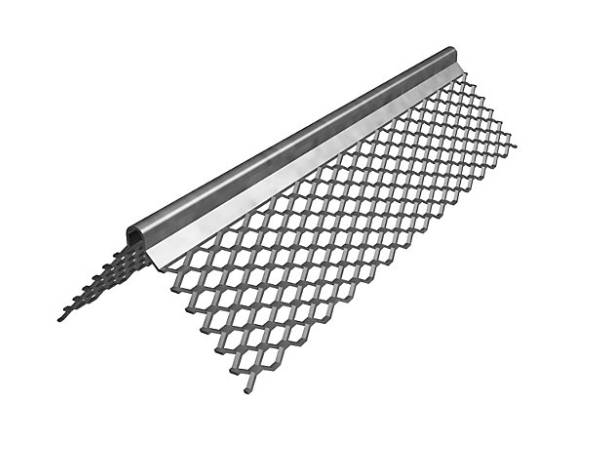
These corner beads like pictured above were made for interior plaster. This style of bead is usually referred to as a 1-A corner bead, following the United States Gypsum part number. The very nose or the bead is made to be left exposed. This flimsy, hollow, metal bead is damaged easily and difficult to repair.
The inside of the bead is usually hollow, and when used outside tend to rust and split over time. The backside is supposed to be backfilled, that is packing inside the flange with mortar to give the bead more strength. This practice is rarely followed. Still, the nose, or the very bead is weak 25 gauge sheet metal and dents easily.
If a section of this bead is dented in a high traffic area, the procedure to repair is to carefully cut out the damaged section with a hack saw, and splice in a new piece. the beads can be spliced using 8 penny nails with the heads cut off.
Once, many years ago, a disgruntled employee at a Smithsonian Museum renovation, went through the job with a hatchet and knocked a dent in every bead. It took union lathers days to repair the damage.
It usually takes a good lather an hour to set one of these beads, 8-10 feet long. That is setting the bead out to a 3/4" thickness using a string line and a plumb bob. Just think what happens when someone bumps into the wall before it is plastered and knocks the bead out. Another hour, another bead.