Deteriorated masonry repaired using acrylic additives
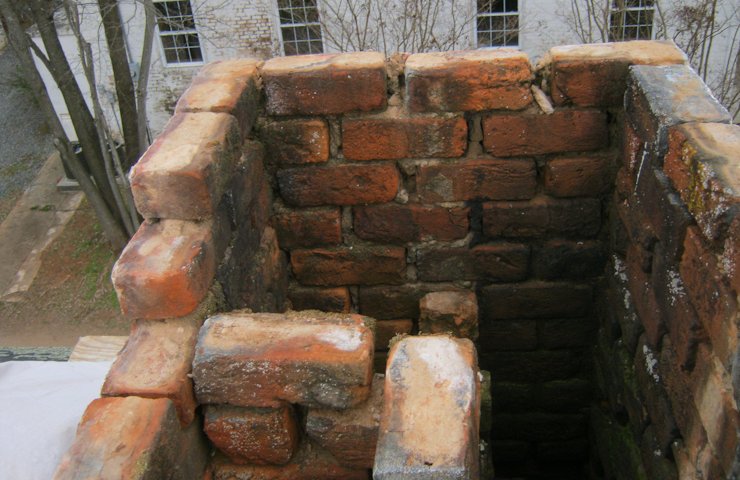
Badly deteriorated chimney built in the 1800's is repaired using our super mortar. The flex-con people probably owe me a lot for free advertising. We use an acrylic bonding admixture mixed half and half with water to make a super mortar that holds all this together. There is some flexibility in the mortar to resist cracking. There are other brands, too.
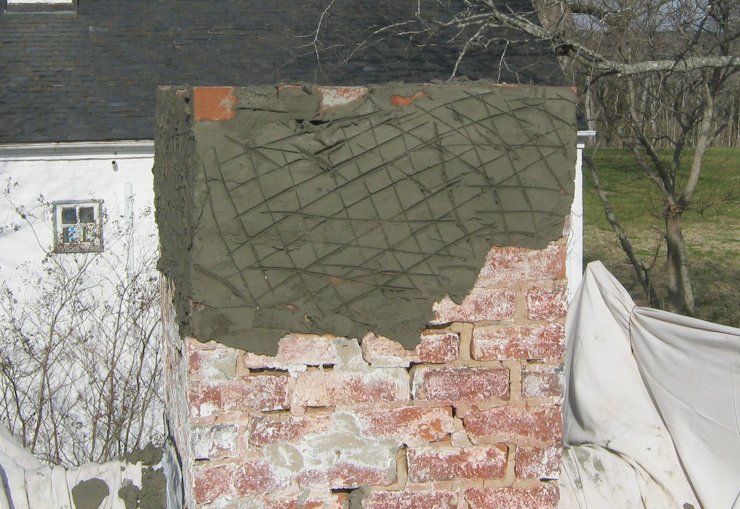
I added bricks to level up the top using our acrylic mix. I put on a scratch coat on the wiggly parts and allowed the mortar to set up overnight before I continued. Not only does the additive double the strength of the mortar, moisture is retained in the mix to prevent dry outs, or when mortar dries out before it sets up.
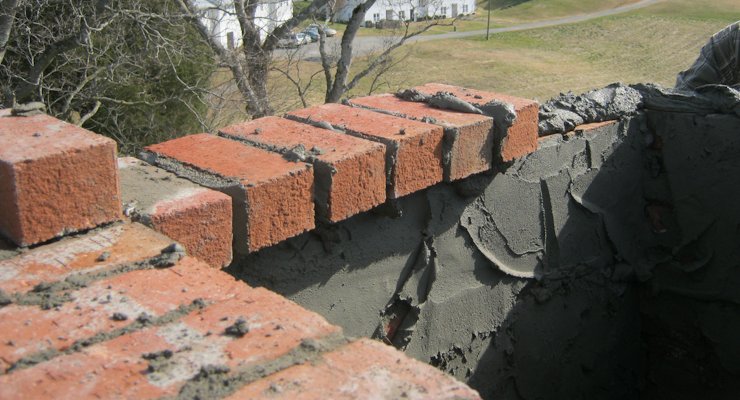
I added a header course of brick for the band at the top. My bricklaying is sloppy, but we straighten it up with stucco.
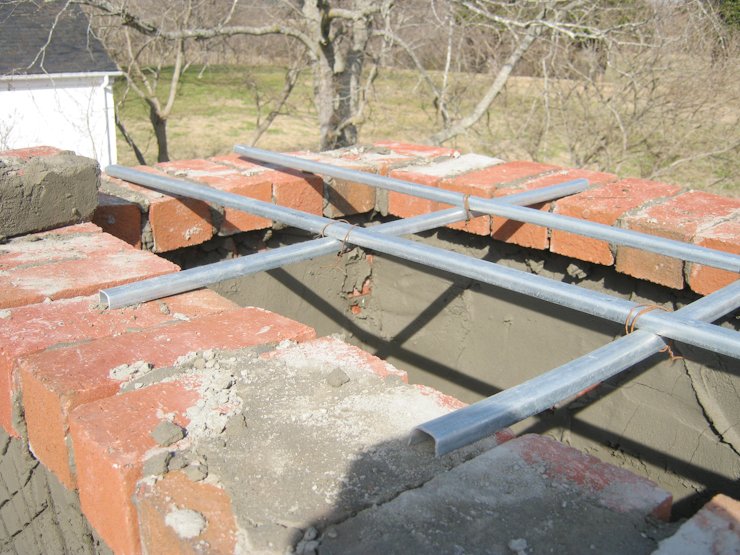
We covered the top with channel iron and metal lath. This chimney will never be used for fires.
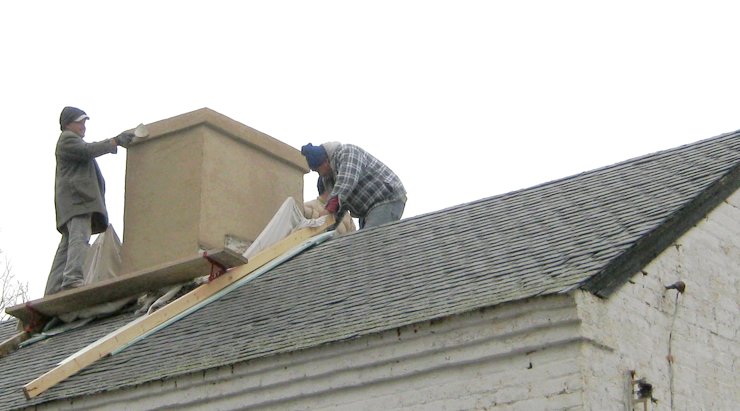
Finish coat is white portand, lime, and sand from the nearby James river. No, we didn't dig it out. I bought the sand in Charlottesville. The chimney matches the original color closely. This chimney should last longer than 200 years this time.
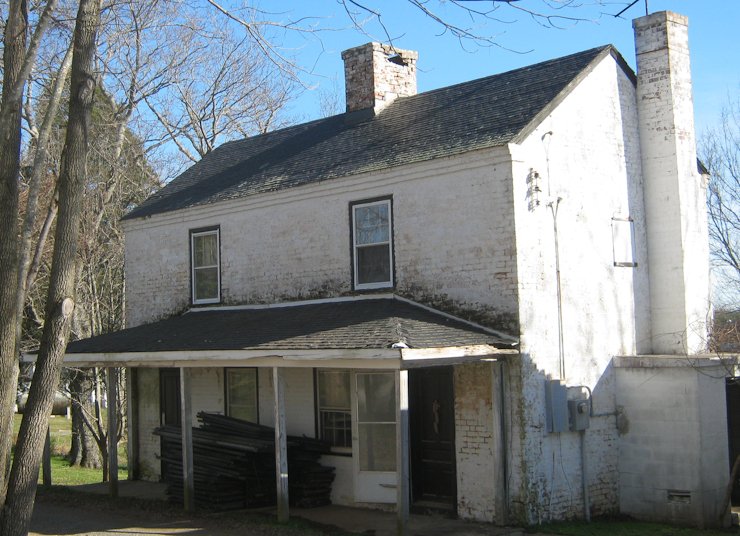
The house we are working on is called "Mary's house". Mary was a cook here at the farm many years ago.
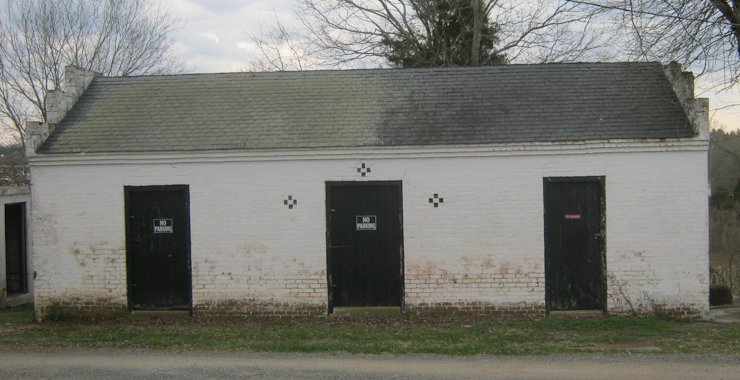
The house next door was the slave quarters, where they locked the slaves up at night. The only ventilation was from the holes you see in the brick work. Virginia had more slaves than any other state. I thought the American people have the right to see how the slaves lived.
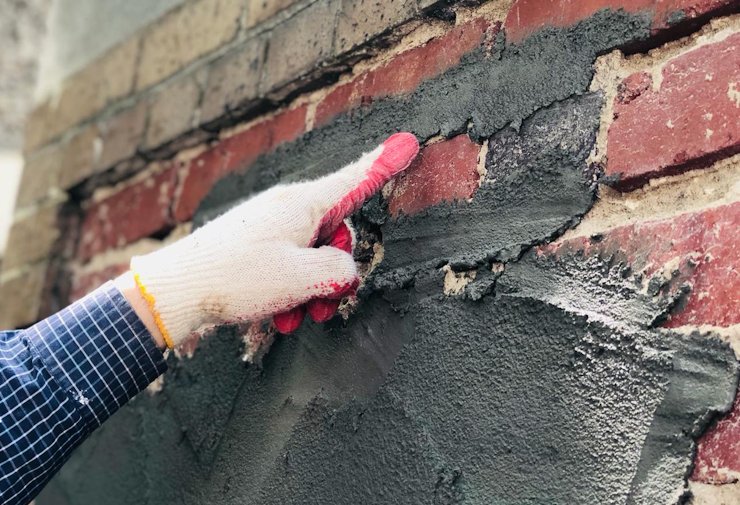
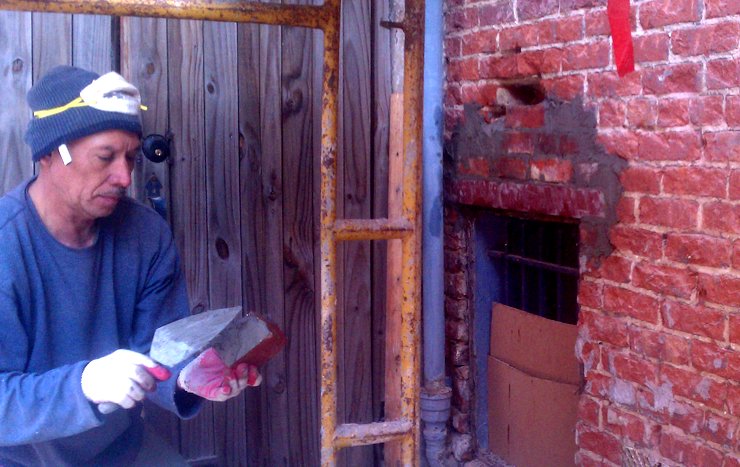
Old lime and sand mortar washes out of joints. We pack the brick joints good when we put on the scratch coat of super mortar. I took this picture to show the homeowner we pack the joints real good.
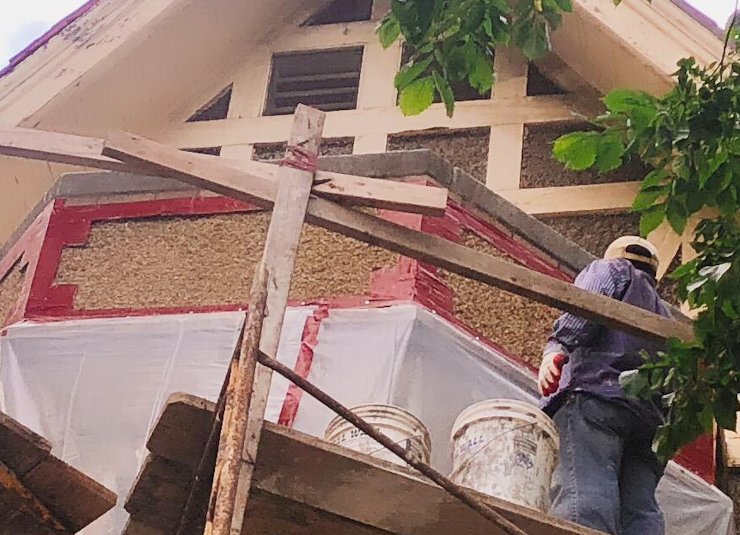
Our finished panels are dry dash pebble dash stucco. This is a house built in 1901 in the Kalorama triangle area of Washington, DC. The house was designed by Waddy Wood, a prominent Washington, DC architect. More on this project here...
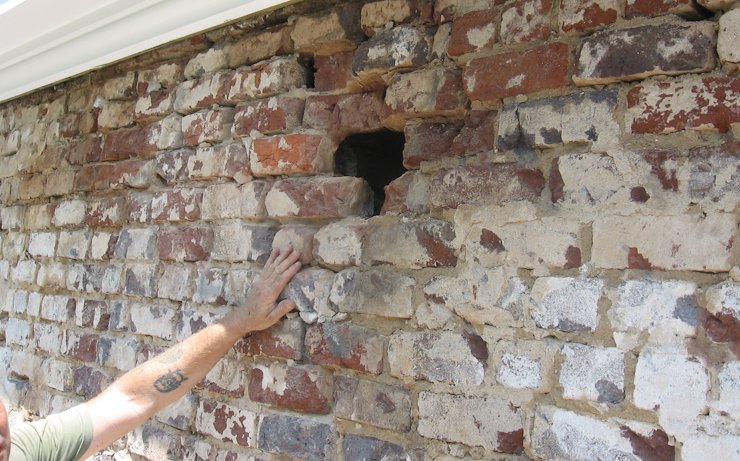
The brick walls on this 1820's house wiggled after we tore off the lime and sand stucco. Our super mortar stabilized the wall.
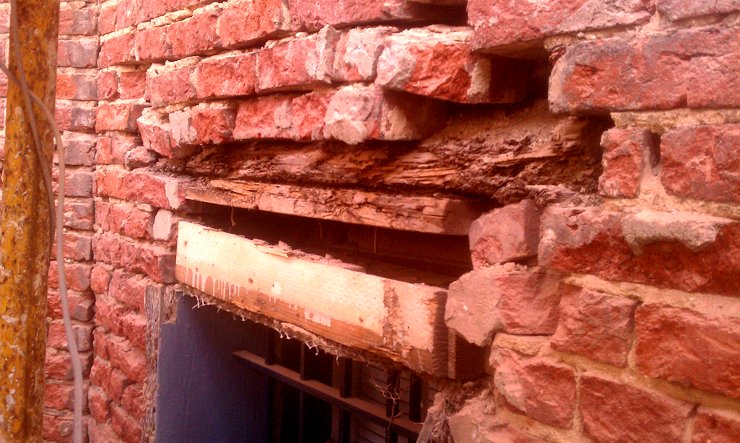
Old wood lintel was rotted out pretty bad on this 1907 house in Capitol Hill. The house was stuccoed sometime after 1930. We tore the stucco off and repaired the wall before re stucco.
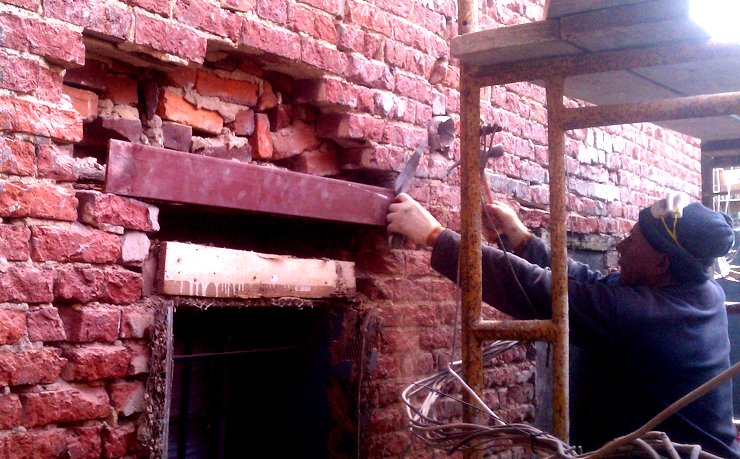
We fixed the windows with rotted lintels by using a angle iron, put in backwards. You may have seen how we do this on my site.
The area over the steel lintel is filled with bricks and super mortar.
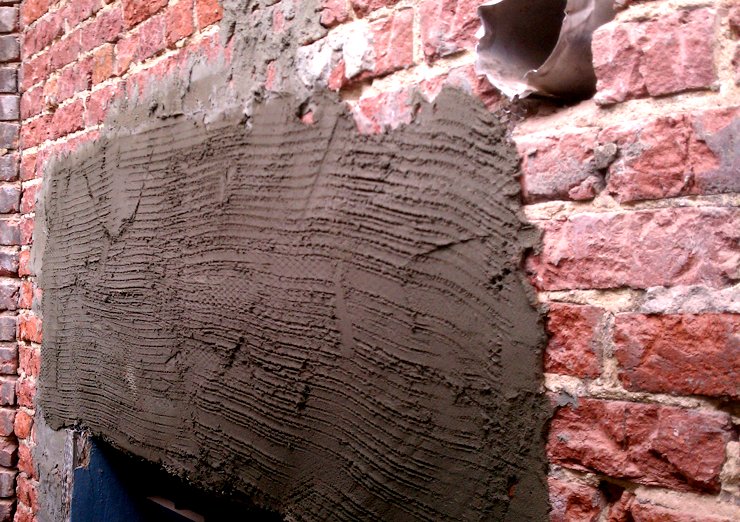
We put metal lath over the lintel and put on a scratch coat of our flex-con mix before scratching the whole wall.
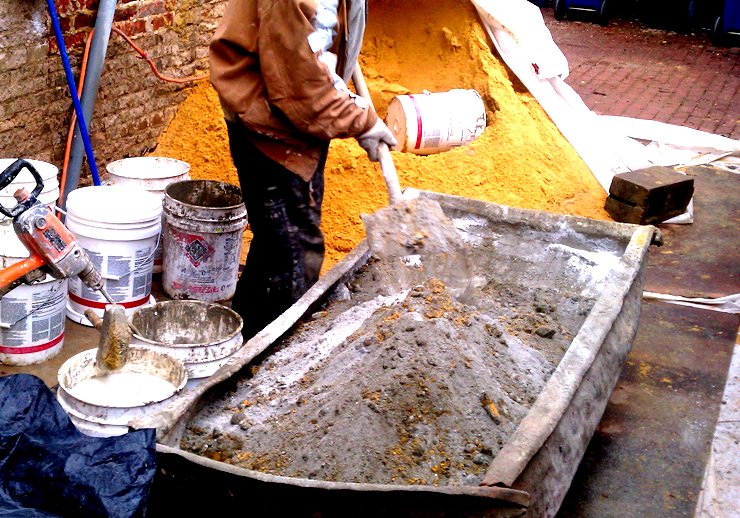
Our dry mix is mixed first in a mortar box. This is Portland , lime, and sand. Our formula, as always, is 20 shovels sand, or about 4 cubic feet, One 94 lb. bag of Portland, and one fourth bag of lime. The dry mix is shoveled into buckets of our half water and half flex con mix and mixed with a drill. You can add the liquid in the box, but drilling in a bucket makes a smooth mix that spreads easily.

A scratch coat is put on the whole wall making sure the mortar is squished into the joints real good. After this sets up, we put on our brown coat with no acrylic, that is, just water in the mix.
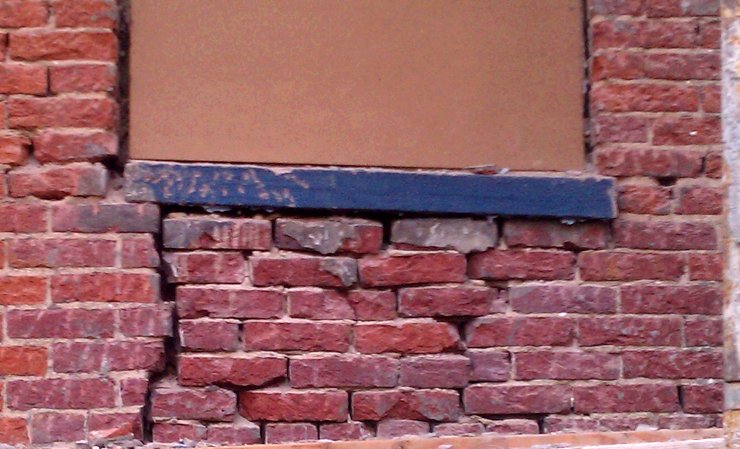
We found the wall in terrible condition when we stripped the stucco off. More about this project here...
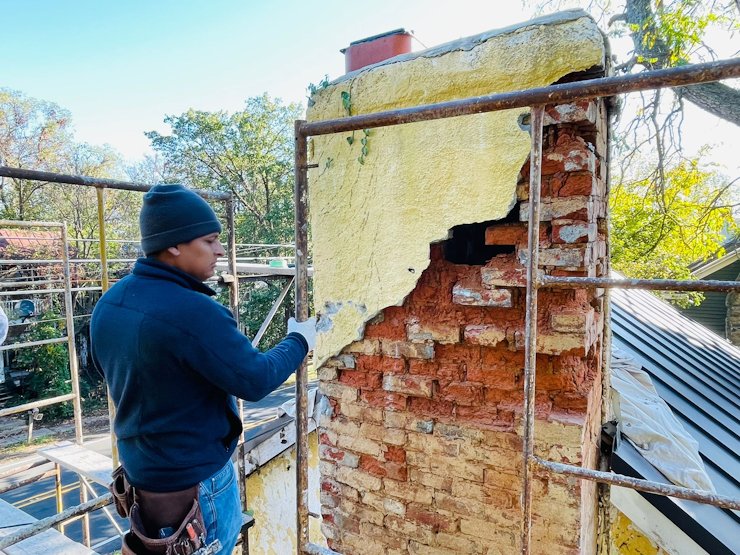
We tore off the stucco that didn't bond well to this badly deteriorated chimney built about 1850 in Upperville, Virginia.
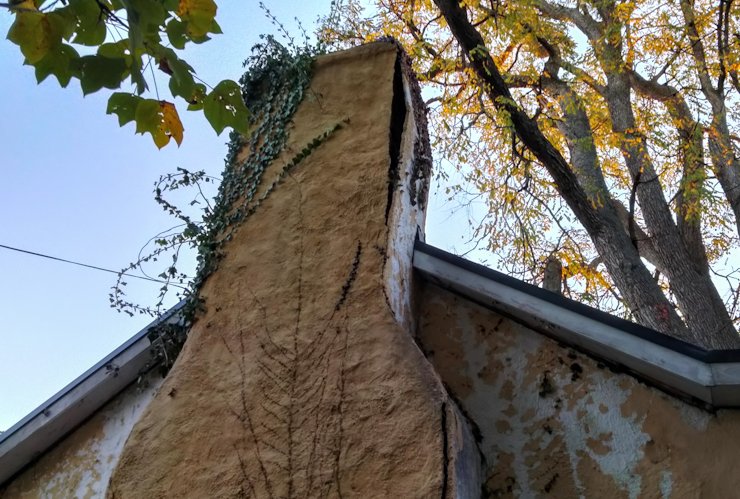
You can see the stucco popping off here. Here's a link to our finished project...
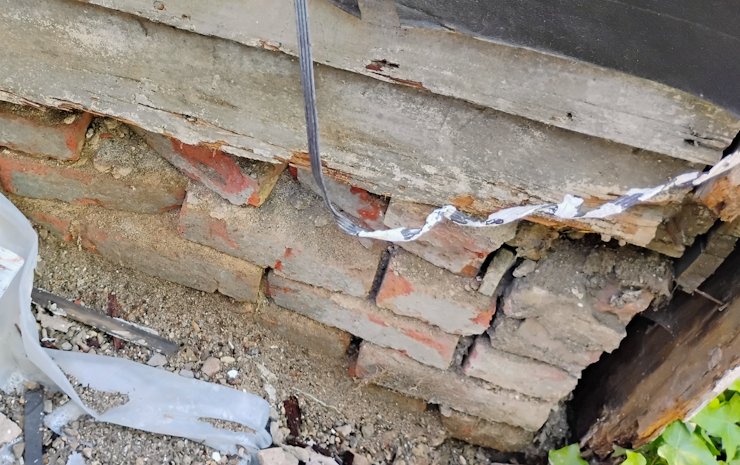
Believe it or not, these bricks are supporting this 1860 house in Georgetown, Washington, DC.
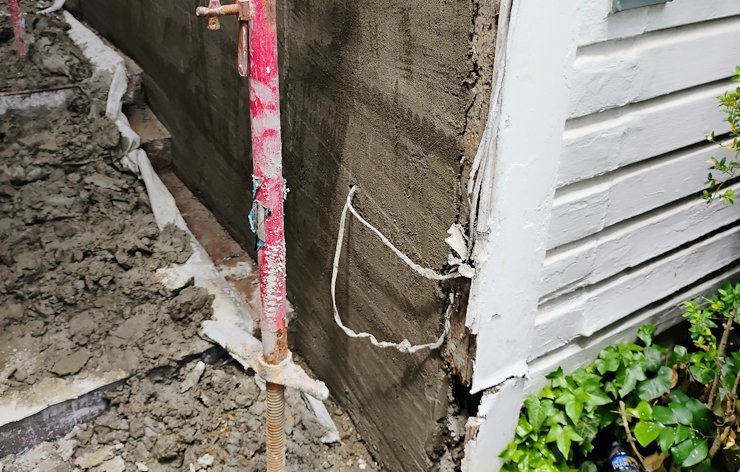
We packed the joints and scratched over the bricks with super mortar.