More News:
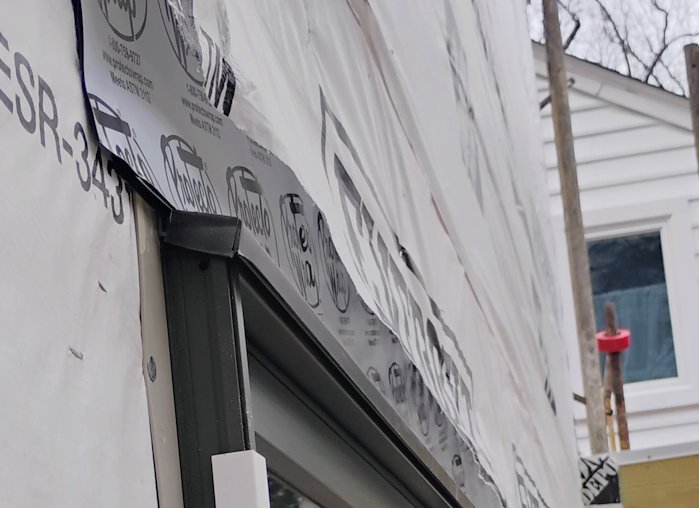
Backward flashing was corrected by making a new flashing and putting over the old flashing. The top of the flashing is then sealed with protecto-wrap and covered with tarpaper. I have published a lot about backward flashing, but I am going to continue until the world changes. Backward flashing is a large cause of rot and stucco failure.
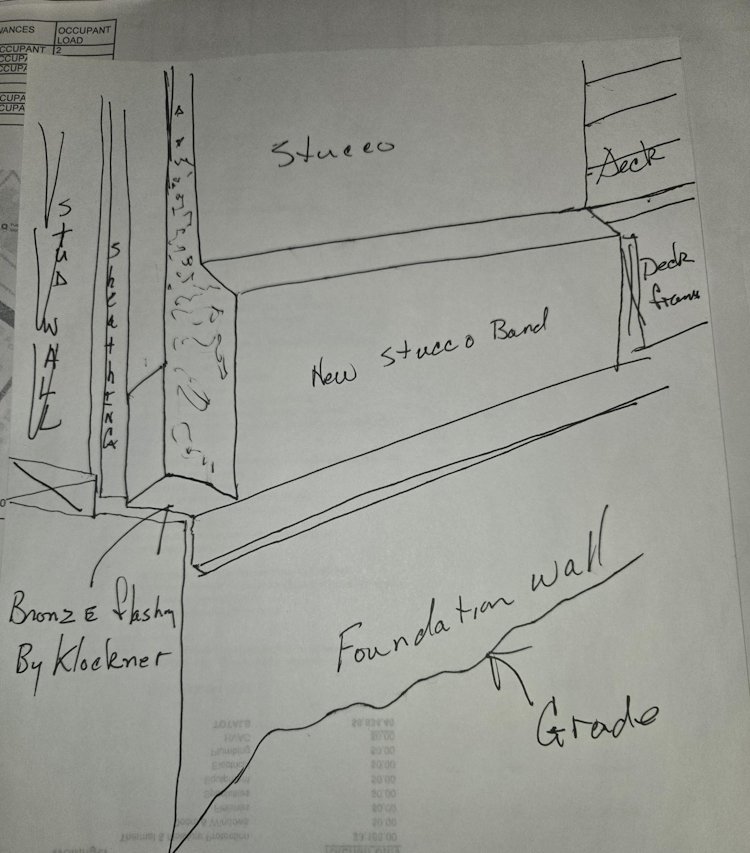
The contractor made a drawing to be approved by the homeowner. The step in the foundation is covered with flashing and a stucco band is used to hide the flashing.
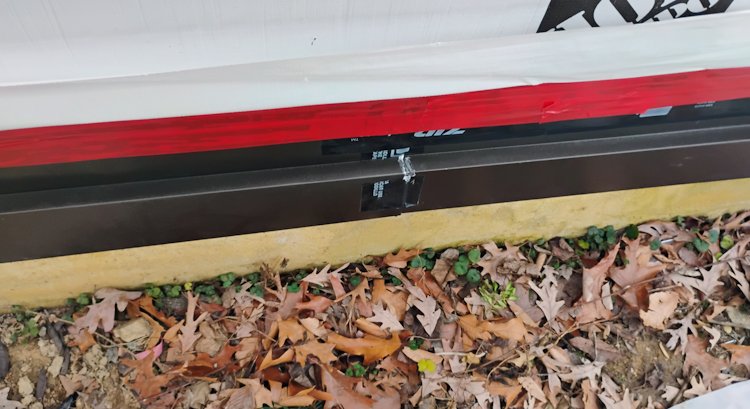
Here the flashing is in place. We taped it to the house wrap and covered the edge with tar paper. I always cover the house wrap with tar paper because I don't trust house wrap. We haven't finished the band yet because a snow storm knocked us into unemployment.
A couple of rants:
Here's a couple things that really rattle my cage.
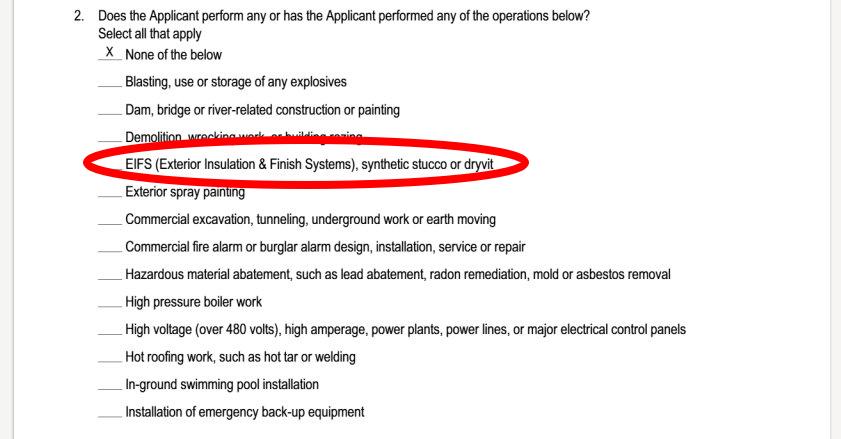
This is my application for contractor's liability insurance. Notice I didn't check the box for EIFS and synthetic stucco. Premiums for EIFS are nearly 30 times more. I know for a fact that most of these EIFS people check "no" when they should check yes. They are already unfair competition through lies. Synthetic stucco should include one coat stucco with styrofoam details around the window. I can just hope that someone who hires these people get stuck with a big claim the insurance company refuses to pay. Anyone who lies to get work shows us what they are made of, and full of.
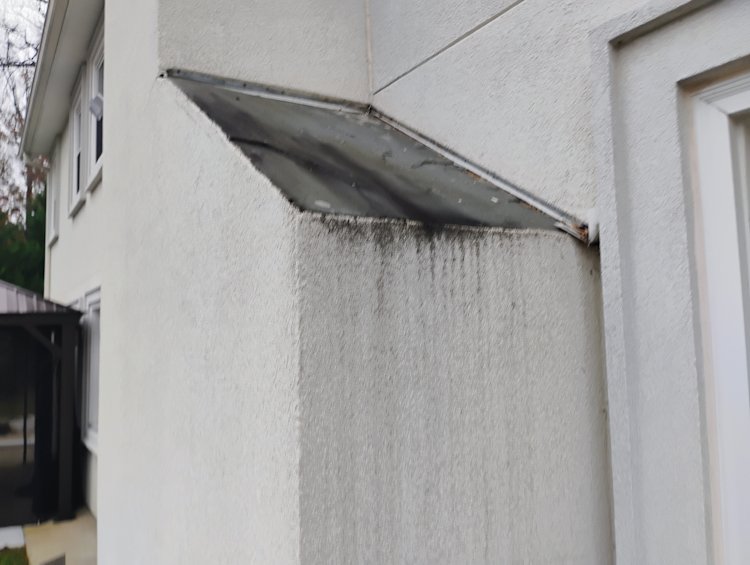
This stone chimney shoulder directs water right into the wall, deteriorating this one year old one coat stucco application. I want people to copy me, but they cut the stone way too short, so all the water running down this chimney runs into the stucco. Here's my article about slate chimney shoulders...
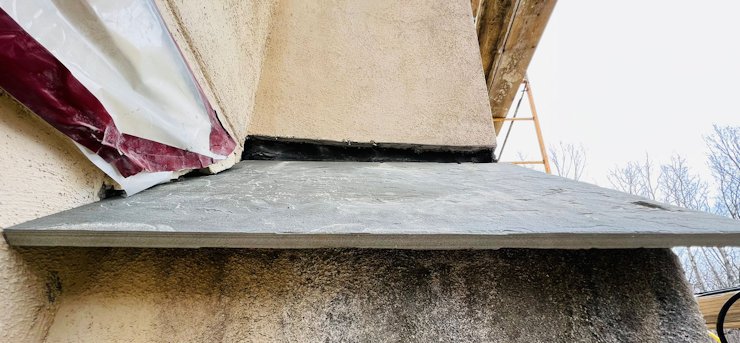
Our chimney shoulders extend past the edge of the chimney, forming a drip edge that directs water away. This stucco should last and last. It's okay to copy me, but read the details first.
I have more rants, but I'm saving for next time, when I have proof.