What happened to Sure Wall by W.R. Bonsal Company ?
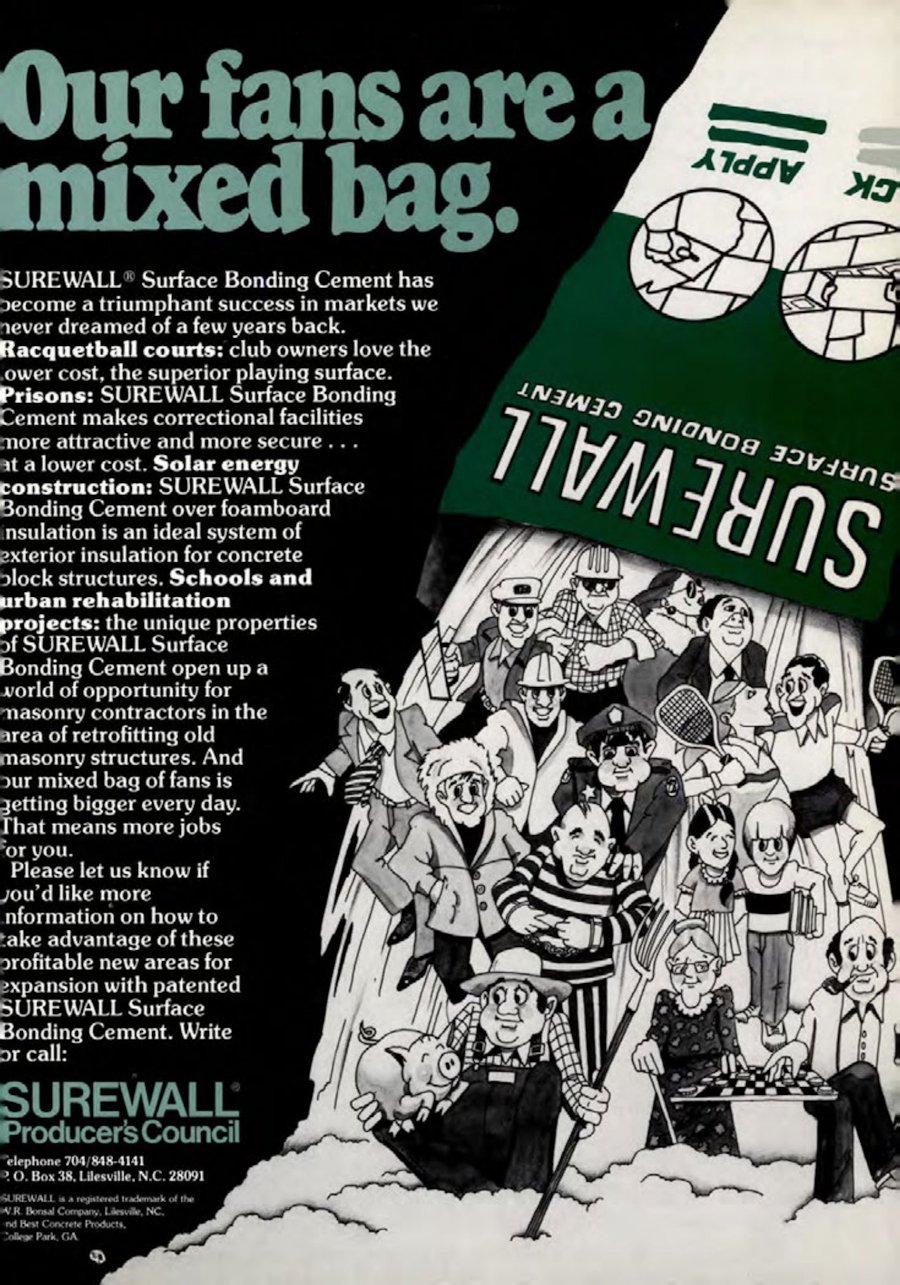
I used Sure Wall in the 1980's, and I thought it was a miracle material. Sure wall was used widely for dry laid block. That is, the blocks were stacked up without mortar in between, then coated with SureWall. The resulting product was stronger than a block wall with mortar in between.
Sure Wall showed a promotional video at Hudson Supply, a now defunct building supply in the Washington area. They played the video with a VHS player, also something now defunct. The video showed a crane lifting up a block wall and dropping it on the ground. A conventional block wall broke apart when it hit the ground. A Sure Wall block wall was lifted up and dropped, and didn't fall apart.
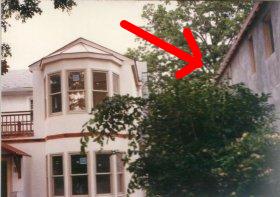
This teeny picture is on my old stucco gallery page, page 2. If I can find the original picture I took in 1988, I'll scan it and make a better copy. Remember, there were no digital cameras in 1988, so I took very few pictures of my jobs.
The arrow points to a house that was built using dry laid blocks and Sure Wall. We put a stucco finish on the whole house in 1989. I did a test patch and cement mortar bonded fine to the Sure Wall without any chemical bonder. I don't think I have pictures. I was impressed how hard the Sure Wall was. When we nailed plaster stop to the wall it made sparks.
Sure wall was also touted as a mortar for repairing old weak masonry, like we did here. Now you see where I got the idea. We plastered over a brick wall in Washington, DC that was so badly deteriorated you could wiggle the wall with one hand. The carpenters couldn't drive nails nails in the wall for wood furring, so they had to frame up a free standing wall to put on drywall.
Sure Wall tried to promote thin stucco, a predecessor to one coat stucco. This thin stucco didn't catch on. This method required 1/4" casing bead and 1/4' metal accessories. I remember the frustration at Hudson Supply when these flimsy 1/4" stops got beat up so easily and a lot of this inventory got thrown away. Hudson quit stocking Sure Wall because the billing and shipping was sporadic and incompetent. Also, Sure Wall was proposing using their material for an EIFS basecoat. Hudson never bought into selling EIFS materials. They saw how flimsy and crumbly styrofoam is decided not to get involved.
Sure Wall was great because it allowed a stucco finish to be put on. There were competitors to the dry stack block method, also. Southern Brick in Richmond, VA ( now defunct) built a building and put on a brand of material made for dry laid block. It was shiny and had reinforcing fibers sticking out. It was so ugly, nobody bought it. Obviously, mortar wouldn't bond to the slick, shiny surface.
Unfortunately, Bonsal got into EIFS. Here is a shot of the 1999 class action suit in North Carolina:
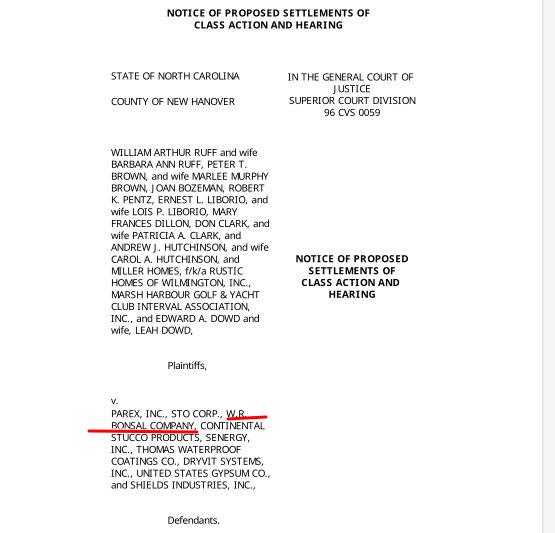
Bonsal was a big loser in the 1999 North Carolina class action lawsuit against EIFS manufacturers. Most of the EIFS was stripped off houses in North Carolina and replaced with other materials. How quickly the public forgot that EIFS was not only banned in North Carolina, but was removed at the expense of these manufacturers. Now EIFS is being put on, rotting houses again. How quickly people forget the lessons of the past. Like the Vietnam war, quickly forgotten, but yet we are likely to make the same mistakes if we don't learn from history.
The EIFS lawsuits is what more than likely killed Surewall. There are other surface bonding mortars for dry laid block, but probably nothing to match the quality of Sure Wall.
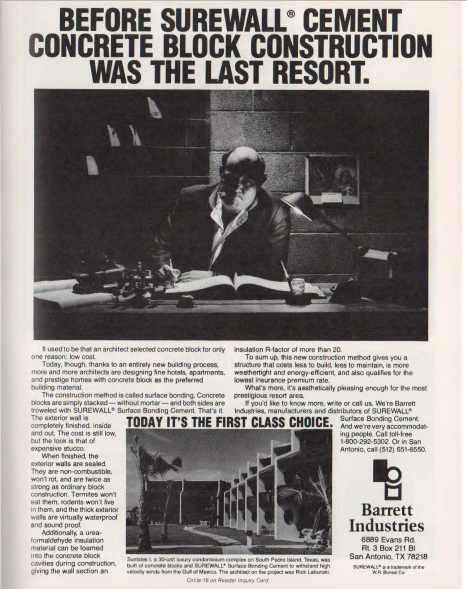
A 1979 ad for Surewall.